If you have a pacemaker or an implanted defibrillator, avoid radiofrequency (RF) body-contouring treatment. The FDA also advises against using RF body-contouring devices if you have metal beneath the skin from an implant or injury. For an intrauterine device (IUD), the FDA gives separate guidance: ask your OB-GYN or primary care clinician whether the proposed procedure poses additional risks for you.
If you’re considering RF skin tightening at Slim & Trim INC in Manassas, Virginia, you can raise that question before making the trip. Tell the studio which appointment you’re considering, where on your body you want treatment and what kind of implant you have. If the booking menu says “body sculpting” or “double chin reduction,” one more detail matters: would the proposed treatment use RF energy?
Why does the type of implant matter?
A pacemaker or implanted defibrillator
A pacemaker and an implanted cardioverter-defibrillator are examples of active implants. Both appear in the FDA’s warning about RF body-contouring devices. The warning applies even when the area you want to discuss is some distance from the implant. If you have a pacemaker in your chest and are considering skin tightening on your abdomen, the FDA’s guidance still applies.
If you’ve already scheduled RF treatment, call the studio before traveling and explain that you have an active implant. Ask to change the booking if you would still like a consultation. That lets you decide whether a conversation would be worthwhile without arriving for a procedure you should avoid.
A metal plate, screw or fragment from an injury
It’s easy to hear “implant” and think only of something electronic. A plate or screws placed to repair a fracture are also relevant. So is a piece of metal that remained beneath the skin after an injury. The FDA specifically includes metal from either source in its RF guidance.
Suppose you had an operation years ago and remember the surgeon discussing screws, but you’re unsure whether they were removed. Say exactly that. A useful description would be, “I had surgery on my right ankle, and I don’t know whether any hardware remains.” Your surgical team or medical records may be able to answer that question. Until you know, leave the RF treatment unscheduled.
An IUD
For someone with an IUD, the practical first step is to ask the studio what procedure and body area it proposes. You can then take a specific question to your OB-GYN or primary care clinician. For example, “I have an IUD and I’m considering external RF skin tightening on my lower abdomen. Does that procedure pose additional risks for me?” If you know the name of your IUD, include it.
If your clinician needs more information, ask what detail would help. It may be the device name or a description of where the provider plans to apply it. You can gather those details before choosing a treatment date. The online booking menu can help you arrange the conversation, while your clinician can address the individual medical question.
What if the appointment says “body sculpting” or “double chin reduction”?
Non-surgical body sculpting describes a goal and can involve different technologies. The FDA organizes its guidance by the energy or technology used. If a listing gives only the service name, ask the provider to identify the proposed method before you decide whether the RF guidance applies. Choosing a differently named appointment on the menu is insufficient to establish suitability.
Non-surgical double chin reduction describes a treatment area beneath the chin. If that’s the area you’re interested in, you can ask, “Would the option you’re considering for my jawline use radiofrequency? I have an implant and would like to check before booking.” Slim & Trim’s service page directs clients to discuss the area and their suitability during consultation. Read about non-surgical double chin reduction in Manassas.
Frequently asked questions
What should I have ready when I call?
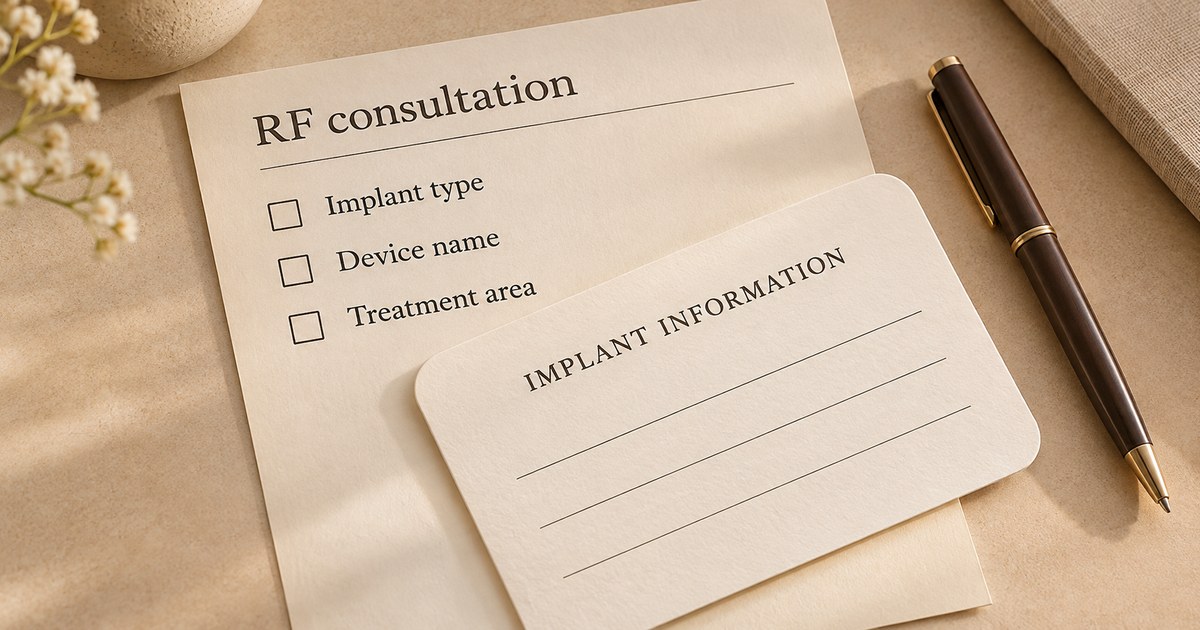
Have the appointment name in front of you, especially if you’re looking at several booking options. Write down the body area you want to discuss and the implant name, if known. An implant card or a procedure summary can help you remember the wording. If you don’t have one, explain what you know and which details you still need to confirm. See what to bring to a Slim & Trim consultation.
Does a tattoo in the proposed treatment area matter?
Yes. Tell the provider where the tattoo sits in relation to the skin you want treated. The FDA advises against RF body-contouring devices on a treatment area with tattoo ink containing metal particles. If you don’t know what the ink contains, say so before scheduling RF. A description such as “the tattoo crosses the lower part of the area I want treated” gives the provider a specific issue to review. Read the full guide to RF skin tightening and tattoos.
Can I book a conversation while I’m gathering information?
Yes. Slim & Trim INC lists a free consultation as a separate appointment. Select that entry if you want to discuss your questions. Services are for adults 18 and older, suitability depends on consultation, and individual results vary. For an implant-related medical question, bring any guidance your treating clinician has already given you.
Plan your visit to Manassas
Slim & Trim INC lists its studio at 7508 Diplomat Dr, Suite 101, Manassas, VA 20109. If you’re traveling from Woodbridge, Gainesville or elsewhere in Prince William County, or coming from Fairfax, book or call before you drive. You can check online availability anytime. For in-person hours or a same-day request, call ahead and wait for confirmation before setting out. Plan your visit around a confirmed appointment.